
Picture this: a potential customer calls your business, gets put on hold, and is met with… nothing. Just dead silence. The seconds tick by, feeling like minutes. Frustration builds. They hang up.
Now, let's replay that scene. This time, they hear thoughtfully chosen on hold music and a helpful message. That moment of friction is instantly transformed into a positive, professional touchpoint.
Why On Hold Music Is a Critical First Impression
I often tell clients to think of their phone system as the virtual front door to their business. When someone is on hold, they’re essentially in your waiting room. What they experience there sets the tone for everything that follows.
Dead air is like being left in a dark, empty room. It feels awkward, unprofessional, and frankly, it makes callers feel completely forgotten. This is precisely why good on hold music isn't just a nice extra—it’s a fundamental part of your customer service.

The psychological impact here is huge, and the numbers back it up. In one study of 10,000 callers placed on hold for a minute, more than 50% of those left in silence hung up. When another group listened to music instead, only 13% disconnected.
That’s a massive difference, and it highlights just how crucial this is for Australian businesses trying to retain every single lead.
Turning Friction into Opportunity
Every second a caller has to wait is a chance to make an impression. Instead of leaving them hanging, a professional on hold program lets you:
- Reduce Caller Abandonment: The right audio reassures callers they're still connected and that you'll be with them shortly. It’s a simple fix that dramatically cuts down on hang-ups.
- Project Professionalism: A polished audio experience immediately signals that your business is organised, established, and cares about the details.
- Reinforce Your Brand: The style of music you play says a lot about you. Are you upbeat and modern? Calm and classic? You’re communicating your brand’s personality before anyone even picks up the phone.
A well-chosen audio track turns a negative (the wait) into a positive (a pleasant and reassuring experience). It builds trust from the very first interaction and sends a powerful message about how much you value your customers.
Of course, music is only part of the equation. The first voice a caller hears is just as important, which is why professional business phone greetings are essential for completing that polished first impression.
The right voice over can humanise the experience from the get-go. As we explore in our guide on how a voice over can create a powerful first impression, this is your chance to show you’re a business that gets the small details right.
Unlock Hidden Revenue with Professional Hold Messaging
Most businesses see on-hold music as just a way to stop callers from hanging up. And sure, it does that. But if that’s all you’re using it for, you’re leaving money on the table.
The real power of a professional on-hold program isn't just the music; it's what you say between the songs. That hold time isn't dead air. It's a direct marketing channel to a captive audience of people who are already interested in what you do.
By weaving custom messages into your hold audio, you can stop simply placating callers and start actively growing your business. It’s all about turning a passive wait into an engaging experience that delivers real, measurable results.
Suddenly, your phone system becomes a quiet but consistent salesperson, working around the clock. Your callers have already made the effort to get in touch. Honestly, there's no better time to inform, educate, and gently persuade.
From Waiting Room to Sales Funnel
Think of your on-hold message program as your own private radio station. The only listeners are people who have a genuine interest in your products or services. This gives you a unique opportunity to talk about specific offerings without ever feeling pushy. The trick is to keep the messages helpful and relevant.
A well-crafted program can tick off several commercial goals at once. You can tailor your messages to perfectly match your current marketing campaigns, ensuring your brand sounds consistent everywhere your customers find you.
Here are a few ways this plays out in the real world:
- Promote New Products: A tech retailer could build excitement for the latest smartphone, prompting callers to ask about pre-orders.
- Highlight Seasonal Offers: An accounting firm can remind callers about end-of-financial-year tax planning services throughout May and June.
- Upsell and Cross-sell: A dental clinic might use the time to talk about a new teeth whitening special or cosmetic dentistry packages.
- Drive Web Traffic: A financial advisor could promote an upcoming retirement planning webinar, telling callers exactly where to go on the website to register.
This kind of focused messaging does more than just fill the silence. It plants seeds that can grow directly into more sales and higher customer lifetime value.
By treating hold time as a marketing opportunity, you’re not just managing a queue—you’re nurturing leads. The return on investment comes from turning previously wasted minutes into measurable business growth.
Improving Operational Efficiency
It’s not just about sales, either. Professional hold messaging is also a fantastic tool for boosting your team's productivity. Just think: how many times a day do your staff answer the exact same questions about business hours, your location, or payment options?
Answering these common queries proactively in your hold message frees up your team's valuable time. When a caller's basic question is answered before they even speak to someone, your staff can focus on the more complex, high-value conversations that really matter.
Consider adding these kinds of efficiency-boosting messages:
- Answering FAQs: "Just a quick reminder, our office hours are Monday to Friday, 9 am to 5 pm."
- Directing Enquiries: "If you’re calling about an existing order, please have your order number ready when we connect."
- Highlighting Online Resources: "Did you know you can track your delivery on our website? Just head to our-website-dot-com-dot-au and click 'Track My Order'."
This simple strategy cuts down on repetitive conversations and streamlines how calls are handled, making things smoother for both your customers and your staff.
The combination of marketing potential and operational gains makes a powerful case for investing in a professionally produced program. If you're looking for guidance on how to write a script that achieves all this, we've got some great tips in our article on crafting compelling on hold messages.
Ultimately, a strategic approach transforms your phone system from a necessary cost centre into a revenue-generating asset that strengthens your brand from the very first moment a customer calls.
Crafting Your Brand's Unique Audio Signature
What your callers hear while they're on hold is so much more than just background noise. It's a direct reflection of your brand's personality. This is your chance to be deliberate and shape an audio experience that tells people exactly who you are. Think of it like designing the waiting room in your office—every choice, from the music to the voice, sets the tone.
The two key elements you'll be working with are music and voice. Nailing the combination is what makes an on-hold experience feel professional and memorable, rather than generic and forgettable. It’s the difference between a custom-tailored suit and something straight off the rack.
Matching the Music to Your Brand's Vibe
The music you play is the first thing that hits a caller's ear, instantly signalling what your brand is all about. The style, tempo, and even the instruments used should all feel like a natural fit for the image you want to present. Getting this wrong can feel jarring and immediately cheapens the experience.
For instance, a high-end day spa would want something that suggests relaxation and luxury—think calm, classical, or ambient music. On the other hand, a fast-moving tech startup would sound completely out of touch with that. An upbeat, modern electronic track would be a much better fit to project their innovative and energetic spirit.
Think about what makes sense for you:
- Financial Advisors or Law Firms: Sophisticated classical music or smooth, gentle jazz projects a sense of stability, trust, and authority.
- Retail and E-commerce Stores: Upbeat pop or indie music can create a positive, modern vibe that gets people excited about your products.
- Healthcare Clinics: Soft, reassuring acoustic tracks are perfect for creating a calming atmosphere for callers who might be feeling anxious.
The aim isn't just to find a "nice" song. It's to choose on hold music that feels completely authentic to your business. This kind of consistency reinforces your brand identity and makes the whole interaction feel seamless.
The Power of a Professional Australian Voice
Music sets the mood, but a human voice is what creates a real connection. For any business operating in Australia, using a professional Australian voice artist is a no-brainer. That familiar accent immediately builds rapport and makes your callers feel like they’ve dialled a local, not a faceless corporation.
The tone of that voice is just as important. Are you trying to sound:
- Friendly and Reassuring? Perfect for customer service lines where showing empathy is everything.
- Sharp and Authoritative? Ideal for corporate or B2B communications where you need to convey expertise.
- Upbeat and Energetic? Great for marketing messages that are promoting new products or a sale.
A professional voice artist does more than simply read your script. They breathe life into your brand's personality, delivering the message with genuine emotion and clarity. It’s a level of quality that DIY recordings or text-to-speech software just can't touch.
When you bring together professional scriptwriting, an expert voice, and clean sound engineering, you get a polished final product. We dive deeper into how this all works in our guide to using audio production with voice overs and jingles.
Making Your Brand Stick with a Jingle
Lastly, let's talk about the secret weapon of audio branding: a great jingle. A jingle is an incredibly powerful tool because it works on a subconscious level. It’s a short, catchy musical hook designed to get stuck in a caller's head, ensuring your brand name stays with them long after the call is over.
Just think of the most iconic jingles you know from Australian advertising—you can probably hear them in your head right now. Weaving a short jingle into the beginning or end of your on-hold message loop reinforces your brand in a way that music or a voiceover can't do alone. It’s that final touch that helps create a truly memorable audio signature.
Navigating the Legal Rules of On Hold Music
It’s a surprisingly common mistake, but one that can land a business in serious hot water. Many owners think nothing of playing the radio or a Spotify playlist for their callers on hold, without realising they’re stepping into a legal minefield.
The truth is, using music for your business isn't as simple as hitting 'play'. Doing it wrong can lead to hefty fines for copyright infringement. Let's break down what you need to know to make a legally sound choice.
Think about the images you use on your company website. You wouldn’t just pull a random photo from a Google search, right? That image is someone else's intellectual property, and using it without the proper licence is a clear path to legal trouble.
Music is exactly the same. Every song you hear is protected by copyright, and using it for a business purpose—like on your phone system—requires a specific kind of public performance licence.
Understanding Music Licences and Royalties
Whenever a song is played to a commercial audience, the creators—songwriters, composers, and artists—are entitled to a payment. These payments are known as royalties.
In Australia, organisations like APRA AMCOS collect these royalties and distribute them to the artists. Your personal Apple Music or Spotify subscription only grants you a licence for private, non-commercial listening. It absolutely does not cover broadcasting that music to your customers.
Using commercial music on your phone system without the correct licence is a breach of copyright law. The penalties can be severe, creating a massive and completely avoidable risk for your business.
This is where professionally sourced on-hold music comes in, offering a much safer and simpler solution.
The Safe Path: Royalty-Free and Licensed Music
Thankfully, you don't need to become a copyright lawyer to get this right. There are two straightforward, legally safe alternatives that protect your business while still giving your callers a great experience.
Royalty-Free Music: This doesn’t mean the music is free. It means you pay a one-time fee to a provider for a licence to use a track without paying ongoing royalties. It's a cost-effective and legally secure way to get high-quality music for your phone system.
Fully Licensed Providers: The easiest and safest route is to partner with a professional on-hold message provider. These services handle all the legal complexities for you. They have vast libraries of fully licensed music, so you can be 100% confident that every track you use is compliant.
So, how do you decide what’s right for your brand's specific personality? This decision tree can help you visualise the best audio path to take.
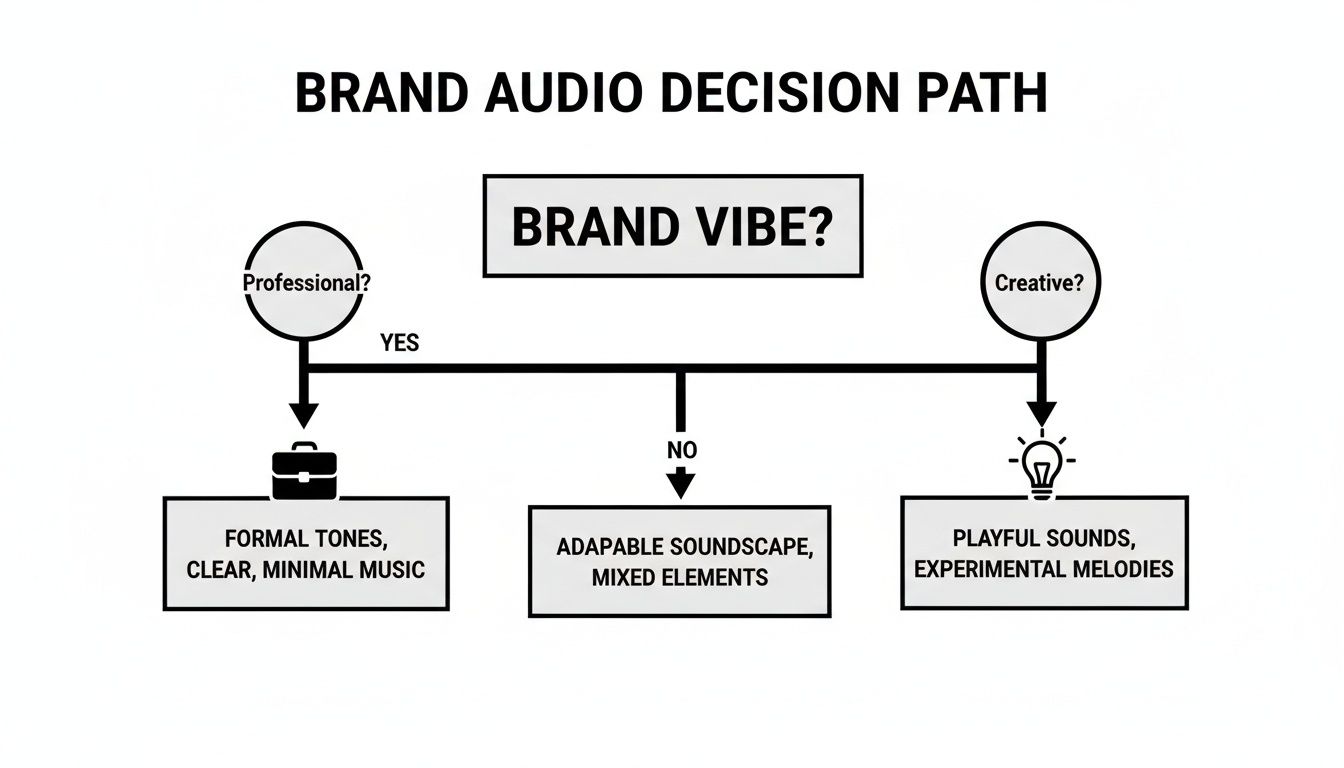
As you can see, the right choice really boils down to the vibe you want to create for anyone who calls your business.
To help clarify the risks, here’s a quick comparison of the most common options business owners consider.
On Hold Music Options Legal Comparison
| Music Source | Licensing Requirement | Risk Level for Business | Recommendation |
|---|---|---|---|
| Radio/Streaming Service (e.g., Spotify) | Requires a specific "public performance" licence, not covered by personal subscriptions. | High | Not recommended. It's illegal without the correct, expensive licence and offers no branding control. |
| Royalty-Free Music Library | Requires a one-time purchase of a licence that covers business/phone system use. | Low | A good option for DIY setups. Ensure you read the licence terms carefully to confirm it covers your use case. |
| Professional On Hold Provider | All licensing is managed by the provider as part of their service. | Very Low | Highly Recommended. This is the safest, most hassle-free way to ensure full legal compliance. |
Ultimately, working with a professional provider is the definitive way to protect your business and get a tailored audio experience.
There's another benefit, too. Choosing services that employ local talent directly supports our creative industries. While the Australian recorded music market saw 8.1% revenue growth recently, the share of local music being streamed has actually been falling. When you use services that source music correctly and hire Australian artists, you're helping our own talent thrive and guaranteeing your legal compliance. You can find more data on why Australian music needs investment and support.
A professional provider is more than a supplier; they're a partner. They handle the legal details so you can have complete peace of mind and focus on what you do best—running your business.
How to Implement On-Hold Music on Your Phone System
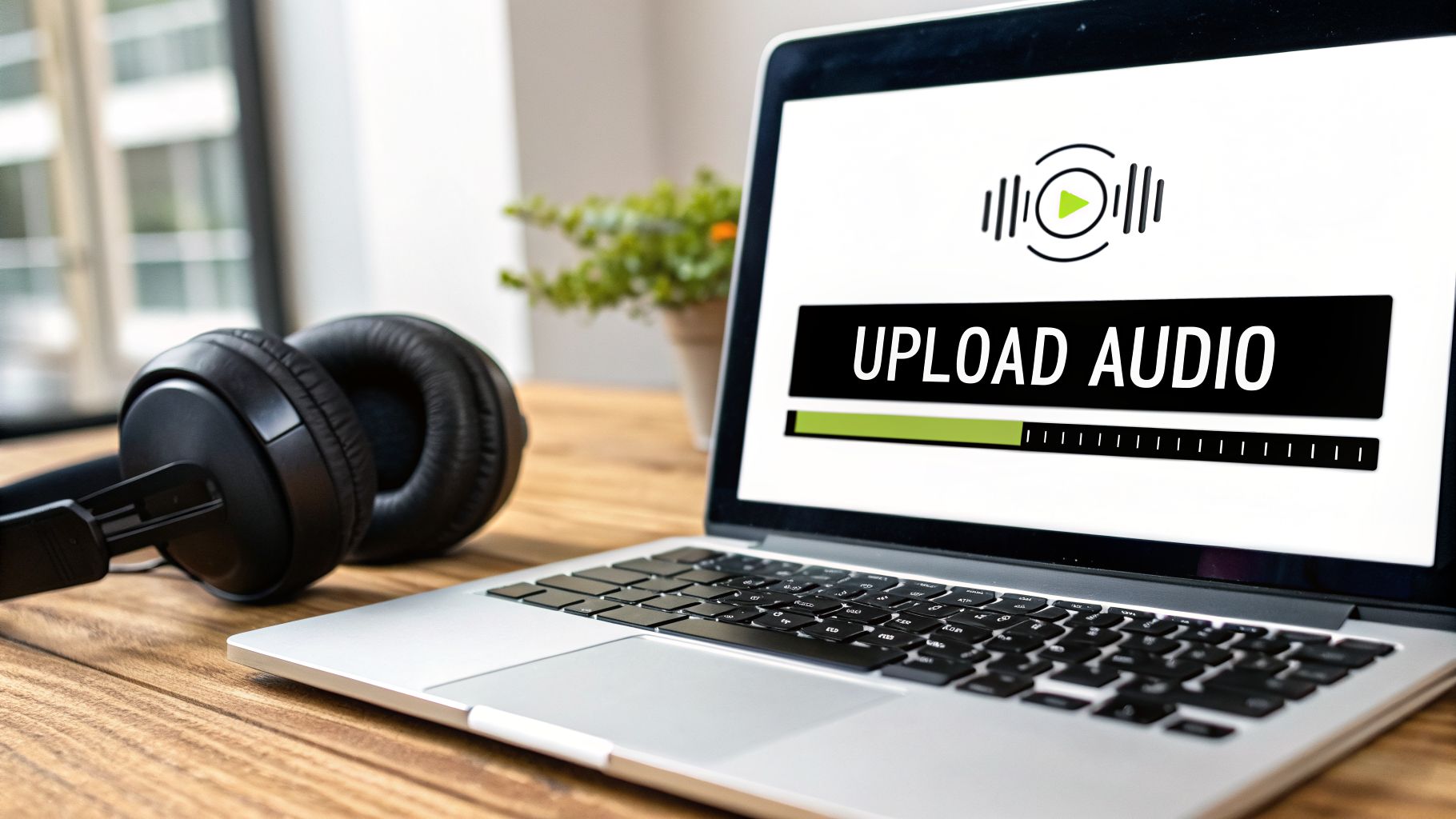
Right, let's pull back the curtain on the technical side of things. A lot of business owners I talk to think setting up on-hold music is going to be some massive IT headache. The good news? It’s almost always surprisingly simple.
Once you’ve finalised your script and have that professionally produced audio file in hand, you’re on the home stretch. Getting it from your computer onto your phone system is usually the easiest part of the whole process.
The Simple Three-Step Upload
Modern phone systems, particularly the cloud-based and VoIP ones, are built for business owners, not IT gurus. If you can upload a photo to Facebook, you’ve got the skills for this.
Find the Right Spot: First, log in to your phone system's admin dashboard. You’ll be looking for a menu option that says something like “Music on Hold,” “Hold Audio,” or maybe “Greetings.”
Pick the Right File: Your system will ask you to upload your audio. You'll likely see options for MP3 and WAV files. While MP3s are smaller, WAV files are what we almost always recommend for phone systems. They are uncompressed, which means they deliver much clearer, richer sound over a phone line, avoiding that muffled, underwater effect.
Upload and Go Live: Just select your new audio file, hit the upload button, and make sure to save your changes. And that’s it—your new on-hold program is live for the next person who calls.
Seriously, that’s all there is to it. On most platforms, you’re looking at a job that takes less than five minutes. If you're exploring options, it's worth seeing how a platform like the 3CX Phone System handles these tasks with its user-friendly interface.
Troubleshooting Common Audio Headaches
Of course, sometimes things don't go perfectly. Callers might complain about fuzzy audio, the volume being too quiet, or the sound cutting out. But here's the secret: these problems almost never have to do with your phone system itself.
Nine times out of ten, the culprit is the audio file. A DIY recording on a cheap microphone or a music file that wasn’t properly formatted for a phone network is where these quality issues begin.
Professional audio mastering is the crucial final step that prevents these problems. It ensures your on hold music is optimised for telecommunications networks, with consistent volume levels and crystal-clear clarity.
A professionally produced track is an entirely different beast. It’s engineered from the ground up to sound fantastic over phone lines, giving every caller a smooth, high-quality experience. It’s the difference between a pixelated, blurry image and a sharp, high-resolution photo.
To make sure your audio is flawless from the get-go, have a look at our guide on using a professional IVR and messages on hold recording. Getting it right the first time saves you a world of troubleshooting headaches and guarantees your brand always sounds polished and professional.
Your Checklist for Choosing the Right On Hold Service
Alright, you’re ready to put everything we've talked about into practice and give your callers an experience that truly stands out. But when you start looking, the sheer number of options can feel overwhelming. How do you find the right partner?
This isn't about just buying an audio file. Think of it as hiring a specialist to craft your brand's audio identity. To help you cut through the noise, here's a practical checklist to guide you. Use these points to compare providers and find one that genuinely fits your business, brand, and budget.
Core Creative Capabilities
First things first, let's look at the creative side of things. The voice and music are what your callers will actually hear, so this is no place to cut corners.
Australian Voice Talent: Does the service offer a good selection of professional male and female Australian voice artists? A local accent is vital for building rapport, and you'll want to find a voice that matches your brand's personality—whether that’s friendly and casual, or formal and authoritative.
Royalty-Free Music Library: Ask about their music library. A deep, high-quality collection is essential. It means you can find a track that fits your brand’s vibe without worrying about the legal dramas that come with using unlicensed music. This is a non-negotiable for legally compliant on hold music.
Scriptwriting Assistance: Let's be honest, writing a script that’s punchy, engaging, and effective is a real skill. A top-notch provider won’t just leave you to it; they'll offer expert scriptwriting help to make sure your messages hit the mark.
Production and Technical Quality
The creative elements are only half the battle. How it all comes together technically is just as crucial. Poor audio quality can make even the most brilliant script sound cheap and unprofessional.
A professional provider isn't just selling you a voice and a music track. They're production experts who master your audio specifically for phone systems, delivering a clarity and polish that DIY solutions simply can't match.
You need a partner who guarantees a high standard of production. This means clean editing, proper audio mastering, and a reliable delivery process.
Service and Support Evaluation
Finally, you need to look at the business relationship. Clear, upfront pricing and dependable support are signs of a provider who’s in it for the long haul, not just a quick sale.
- Production Quality: How is the final audio finished? They should be able to guarantee a clean, broadcast-ready file that's free of any pops, clicks, or background noise.
- Turnaround Time: How fast can they get the job done? Look for a firm commitment, like a 24–48 hour delivery promise, so you know exactly what to expect.
- Pricing Transparency: Is the pricing straightforward? Be wary of hidden fees or confusing subscription models. The best providers offer simple, upfront costs based on what you actually need.
- Customer Support: What happens after you've paid? Good ongoing support shows they’re invested in your success and will be there to help with any questions or future updates.
Ticking off these boxes will give you the confidence to choose a partner who delivers a high-quality, legally sound product that makes your business sound every bit as professional as it is.
Frequently Asked Questions About On Hold Music
Dipping your toes into the world of professional on-hold music for the first time? It’s natural to have a few questions. We’ve answered these hundreds of times for business owners, so we’ve put together the most common ones to give you the clarity you need.
Here’s a quick rundown of what people usually ask before they’re ready to upgrade their caller experience.
How Much Does Professional On Hold Music Cost?
This is usually the first question on everyone's mind. While costs can vary, the most straightforward approach is to find a service with clear, upfront pricing. Instead of getting tangled up in a monthly subscription, look for a one-time fee that covers everything in a single package: the voice artist, the licensed music, and the final production.
This makes getting professional on hold music a simple, predictable investment. The best providers will give you an instant quote based on your script’s word count, so you know exactly what you’re paying from the get-go. No hidden charges, no recurring fees.
How Often Should I Update My On Hold Message?
To stop your audio from sounding stale to people who call you regularly, a good rule of thumb is to refresh your on-hold message every 6 to 12 months. It’s a simple way to prevent caller fatigue and make sure your brand always sounds current.
That said, you should definitely plan for more frequent updates to tie in with your business activity. Think about new product launches, seasonal sales, or even just changes to your trading hours. A timely message shows you’re on the ball and turns your phone system into a genuine marketing asset.
A static, outdated on-hold message can make your business seem out of touch. Regular updates transform your phone system into a dynamic marketing tool that reflects your current business goals and keeps callers engaged.
Can I Use a Popular Song for My On Hold Music?
This is a big one, and the answer is a hard no. You absolutely cannot use popular songs from artists like Taylor Swift or Ed Sheeran on your business phone system.
To play commercial music like that, you need a specific—and often incredibly expensive—public performance licence from rights organisations like APRA AMCOS in Australia. Using it without the right licence is a breach of copyright and can land you in hot water with some hefty fines. The safest, most professional path is always to use a royalty-free track or a fully licensed song supplied by your on-hold message producer. It guarantees you’re 100% legally covered.
What Is the Difference Between an IVR and an On Hold Message?
It’s easy to mix these up, but they play two very different roles in your phone system.
- IVR (Interactive Voice Response): This is your automated "front desk." It’s the first voice a caller hears, guiding them with a menu like, "Press 1 for Sales, Press 2 for Support." Its main job is to direct traffic efficiently.
- On Hold Message: This is the audio program—a mix of music and spoken information—that plays once a caller has been put in a queue or is waiting for a transfer. Its job is to keep that person informed and entertained while they wait.
The easiest way to think about it is this: the IVR is the helpful receptionist who directs you to the right department. The on-hold message is the curated background music and interesting magazine you get while you wait in the lounge.
Ready to create a polished, professional sound for your business? At The Voice Over Guy, we make it simple. Get broadcast-quality on-hold messages, IVR recordings, and jingles with fast turnarounds and transparent, upfront pricing. Elevate your caller experience today by visiting https://thevoiceoverguy.com.au.